
Stonewall: A Building. An Uprising. A Revolution. by Rob Sanders, illustrated by Jamey Christoph (Random House, 2019, 40 pages). This picture book is narrated by the building, originally a stable built in the 1840’s, that on June 28, 1969, became the site of one of the most well-known events in the gay rights movement. When I reviewed this book in 2019, it introduced me to an event that I knew almost nothing about. Fast forward almost exactly six years, when a trip to NYC led me to visit this famous inn.

I arrived in New York City in the middle of a very hot July Wednesday. After checking in at Penington Friends House (highly recommended for a reasonably-priced NYC stay), I took a fifteen-minute subway ride to Christopher Street in Greenwich Village, where I dove into Stonewall’s history at the Stonewall National Monument Visitor Center, right next to the inn. It’s a pretty small space, but it’s packed with information, not only about Stonewall, but also other LGBTQ+ protests from the era.

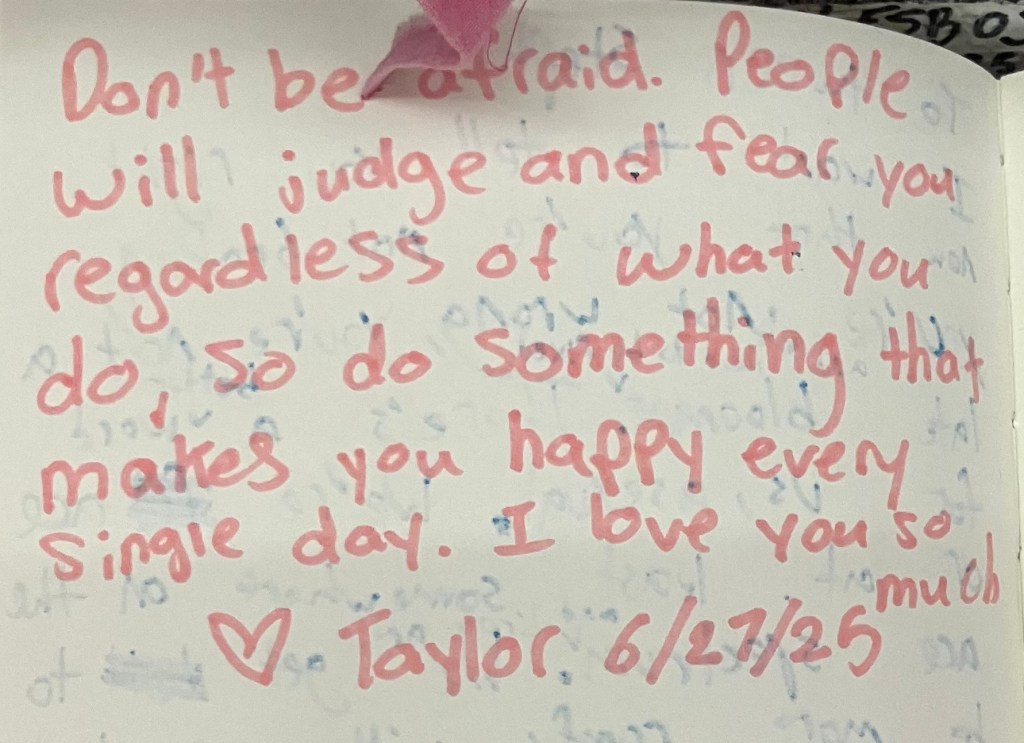
The history of the Stonewall uprising is told in panels along one wall., along with personal accounts from people who were there on the night of the uprising. In front of these panels is a replica of the Stonewall Inn’s jukebox, with a collection of music curated by DJ Honey Dijon to celebrate the spirit of joy and rebellion at the Stonewall. On the other side of the room a collection of notebooks inviting people to write about their own experiences, like this one called, “To…your younger self,”. Reading these personal notes shows how the movement started by Stonewall continues to impact people today, as well as the work that still needs to be done.

Across the street, you can enjoy Christopher Park, a small park with benches around its perimeter that’s home to artist George Segal’s “Gay Liberation” statues of a pair of couples: two men standing and two women sitting. Created in 1980, their installation was (surprise) delayed by controversy until 1992. When I visited in July there was a photo exhibit on the fence outside the park of early LGBTQ+ activists, although this National Park Service site says the exhibit ended in May, so it may be gone.

And finally, if you are over 21, you can go into the Stonewall Inn itself, which I did, although at 3:00 on a Wednesday afternoon, I was the only patron at the bar (relax, I ordered a seltzer with lime). I joined a couple other people sitting outside with their drinks and enjoyed the laid-back city atmosphere. Although its legacy as a gay bar lives on, Stonewall feels quite gentrified, as does the Greenwich Village neighborhood, and you’ll get a better sense of the history at the visitor center.
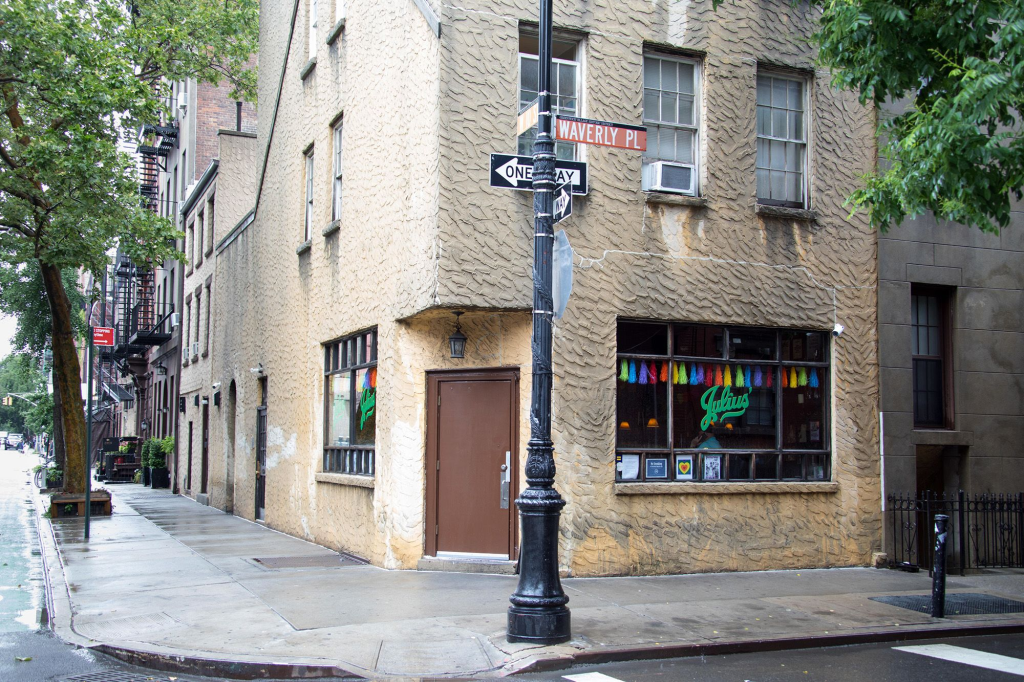
If you have time, you can go back in time a few more years and visit the site of another protest, Julius Bar, just a couple minutes away from the Stonewall Inn. On April 21, 1966 a Sip-In organized by the early gay-rights group, the Matttachine Society. took place, when three members, after identifying themselves as gay, were refused service. The publicity around this event and subsequent court case resulted in a ruling in favor of gay people’s right to assemble.
Books to read

The Stonewall Riots: Making a Stand for LGBTQ Rights by Archie Bongiovanni, illustrated by A. Andrews (First Second, 2022, 128 pages). Part of the History Comics series, this book follows teens Natalia and Jax when they go back in time with Natalia’s abuela to the 1969 night of the Stonewall uprising. A fun introduction for older elementary and middle school kids.

The Stonewall Riots: Coming Out in the Streets by Gail E. Pitman (Abrams Books for Young Readers, 2019, 208 pages). Told through the stories of 50 objects, this book traces the gay liberation movement before and after Stonewall, as well as detailing the riots. Excellent for middle school and up, it could be read from cover to cover or browsing through the different stories.

Pride: The Story of Harvey Milk and the Rainbow Flag by Rob Sanders, illustrated by Steven Salerno (Random House Books for Young Readers, 2018, 48 pages). Although this isn’t about Stonewall, it tells the story of Harvey Milk, an important activist in the LGBTQ+ rights movement and the flag that has become its best-known symbol. All ages.

 The Resistance Files