Veterans Day originated as Armistice Day, celebrating the end of World War I, when an armistice was declared that began at the eleventh hour on the eleventh day of the eleventh month. In 1954, President Dwight Eisenhower changed the name to All Veterans Day, later shortened to Veterans Day, a holiday to honor veterans of all wars, although it’s still called Armistice Day in France and Remembrance Day in the United Kingdom, Canada, and Australia.
While I’m on board to honor the contributions of veterans, wouldn’t it be lovely to see Veterans Day rendered obsolete someday by the cessation of war? To paraphrase John Lennon, you may say I’m a dreamer, but a trip to the Peace Memorial Park in Sherborn, Massachusetts revealed that I’m not the only one.
The Peace Abbey was founded in 1988 by educator Lewis Randa as a resource to promote peace, nonviolence, and animals rights through public art, memorials, and educational programs. Although financial difficulties forced them to close their doors and sell their buildings in 2012, Lewis and his colleagues continue to work for a variety of peace-related causes, and the outdoor peace memorials created by the Abbey remain open to the public.

At the center of the memorial are statues of Mahatma Gandhi and Emily the cow. Emily escaped from a Hopkinton, Massachusetts slaughterhouse in 1995, and after evading capture for 40 days, found a home at the Peace Abbey where she lived until her death in 2003. Her statue is a tribute to vegetarianism, with about a dozen plaques with quotes on the subject surrounding her, and it also marks the final resting place of her remains.

The Gandhi statue is encircled by low brick walls, each one containing half a dozen plaques commemorating peace activists from a variety of countries, backgrounds, and eras: George Harrison, Maria Montessori, Johnny Appleseed, Jesus of Nazareth, Anne Frank, and Muhammad Ali, to name a few. Each plaque includes information on what the person did, the years they lived, and a quote.
At the end of each wall is a plaque with a prayer for peace from different religious traditions. In addition, memorials are scattered about for war correspondents, unknown civilians killed in war, victims of violence, conscientious objectors, and Princess Diana, with an acknowledgement of her work to rid the world of land mines.

It’s a pretty quick visit, but it felt to me like a good starting place for a much deeper dive into the work of the peacemakers who are commemorated here. I was familiar with some of them, but many of the names were new to me. From what I know of the ones I recognized, I’m sure that each one has an interesting story to learn about.
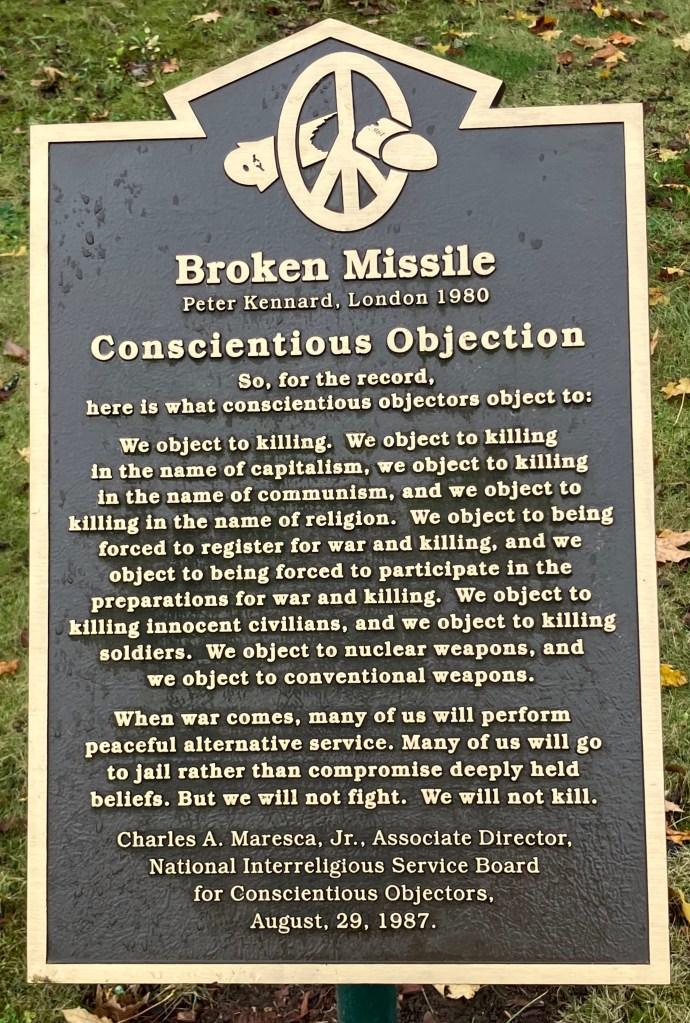
John F. Kennedy once said, “”War will exist until that distant day when the conscientious objector enjoys the same reputation and prestige that the warrior does today.” Perhaps taking a moment on Veterans Day to honor those peacemakers and conscientious objectors in the same way we do war veterans will bring that day closer.
Books to Read
There are many books on peacemakers and activists. Here are a few to sample.

Putting Peace First: 7 Commitments to Change the World by Eric David Dawson (Viking Books for Young Readers, 2018, 160 pages, grades 5-9). At the age of 18, Eric David Dawson founded the nonprofit Peace First to help young people create a more peaceful world today. This handbook helps put his ideas into action.
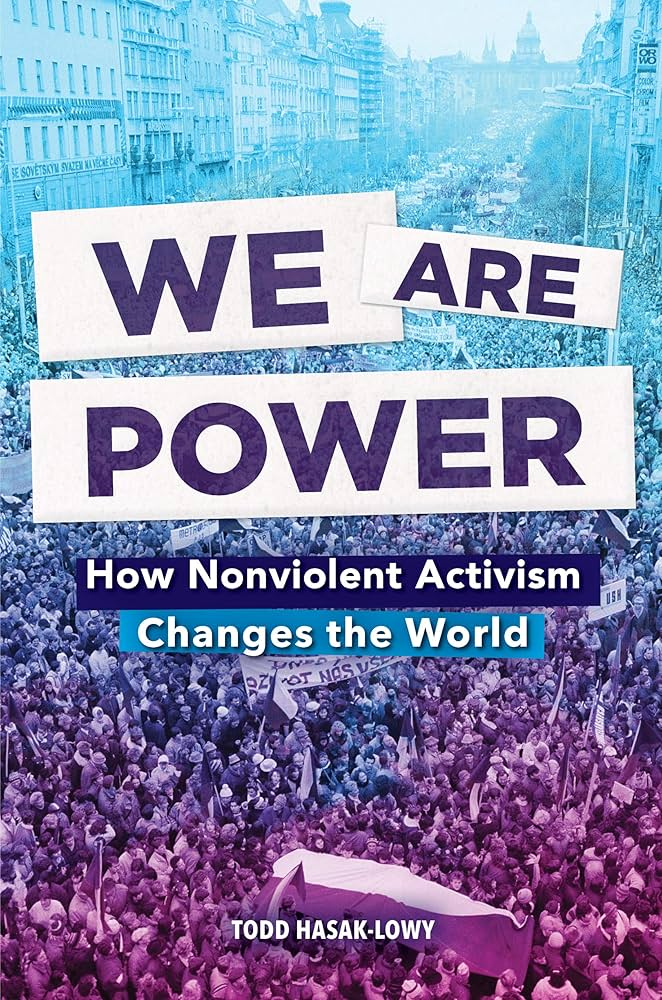
We Are Power: How Nonviolent Activism Changes the World by Todd Hasak-Lowy (Abrams Books for Young Readers, 320 pages, grades 5-9). An introduction to how nonviolent activism can bring about real changes, with stories of people who have used those strategies successfully.

Walking Toward Peace: The True Story of a Brave Woman Called Peace Pilgrim by Kathleen Krull, illustrated by Annie Bowler (Flyaway Books, 40 pages, ages 4-8). The story of Mildred Lisette Norman, who changed her name to Peace Pilgrim and walked through all 50 states from 1953 until her death in 1981, having conversations with people about creating a more peaceful world.

Peace by Baptiste Paul and Miranda Paul, illustrated by Estelí Meza (North-South Books, 2021, 40 pages, ages 4-8). Simple rhyming text and lush illustrations offer concrete tips for living in peace, both with other humans and with animals. Drawn from the authors’ experiences growing up in war-torn Mozambique.
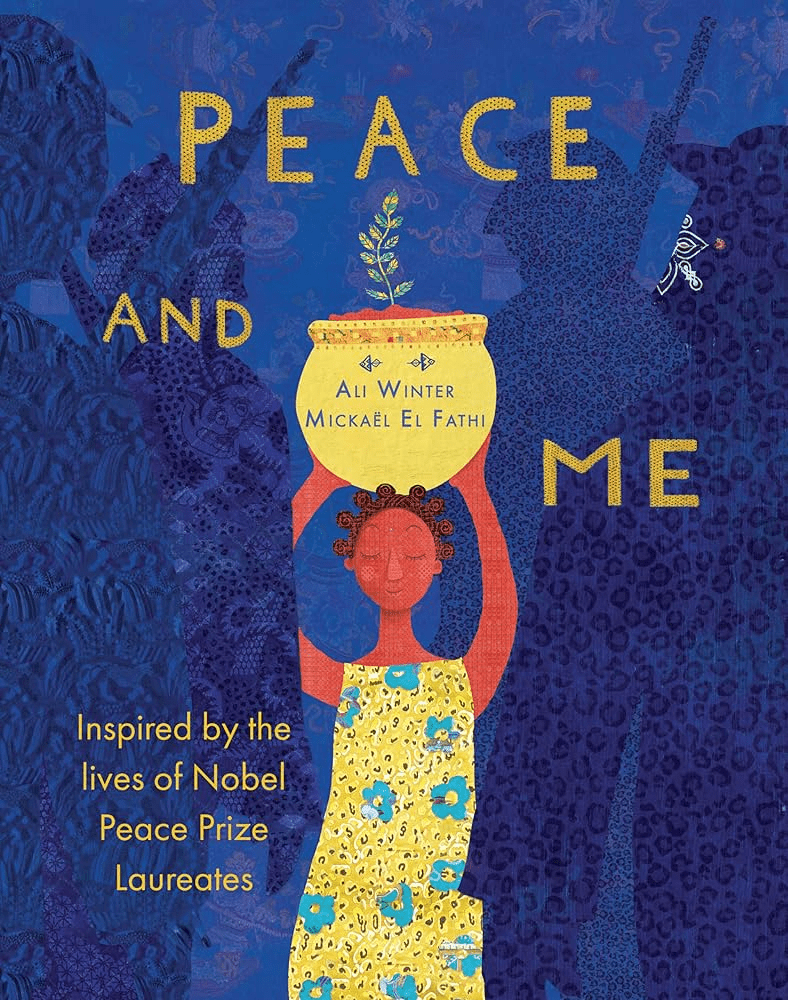
Peace and Me: Inspired by the Lives of Nobel Peace Prize Laureates by Ali Winter, illustrated by Mickael El Fathi (Lantana Publishing, 20 18, 32 pages, grades 1-5). Profiles of twelve winners of the Nobel Peace Prize between 1901 and 2014.

 The Resistance Files