While the United States observes Labor Day in September, working people are celebrated in other parts of the world during the first week of May. After spending the September Labor Day exploring the birth of the American Industrial Revolution in the Blackstone Valley, I decided to visit Lowell National Historic Park for another take on this history.
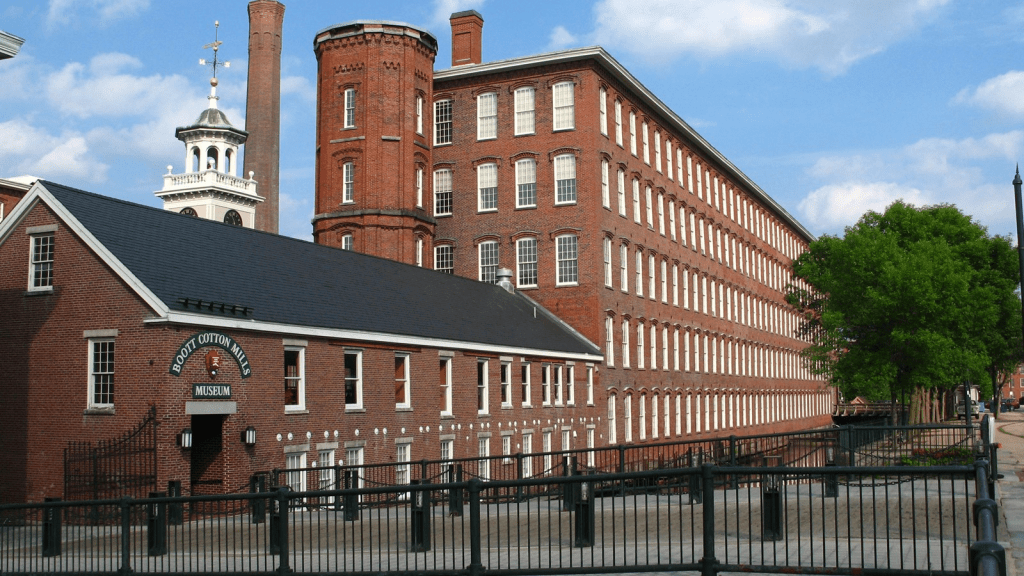
While you could definitely spend the whole day in Lowell, exploring not only the mills but the canals and Merrimack River on foot or by trolley, I only had a couple hours, so I limited myself to the Visitors Center, the Boott Cotton Mills Museum, and the Boarding House Museum at the Morgan Cultural Center. The Visitors Center is a good starting place to get your bearings and learn about other places to visit, since they are somewhat spread out around the city.
Lowell is named for Francis Cabot Lowell, a 19th-century businessman who started his career importing goods from overseas, but soon became convinced that America needed to produce more goods domestically. He spent two years in England, secretly studying the textile mills there, and, like Samuel Slater in Pawtucket, used what he learned to build a New England mill: the Boston Manufacturing Company in Waltham, Massachusetts.
Lowell’s factory differed in two significant ways from the English and Rhode Island models. All parts of the manufacturing process, from raw cotton to finished fabric, were done in one place, a process called vertical integration that’s still used today by companies like Apple and SpaceX. And instead of child labor, he recruited young women from neighboring farms.
Lowell died just three years after opening the Boston Manufacturing Company, but his partners expanded the business and moved north where they could harness the power of the Merrimack River. They named their new mill town in honor of their founder, and the young women working there became known as the Lowell Mill Girls.
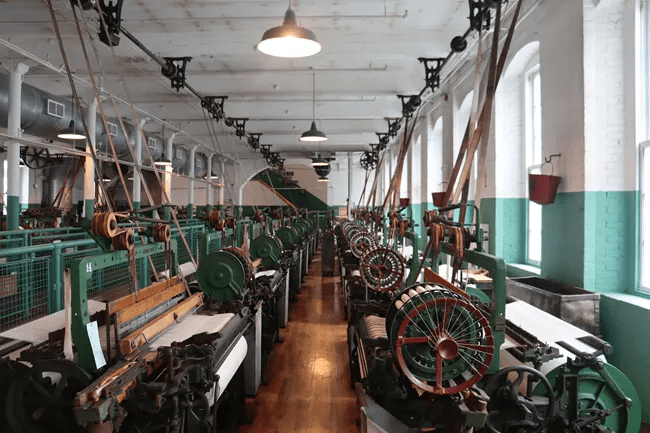
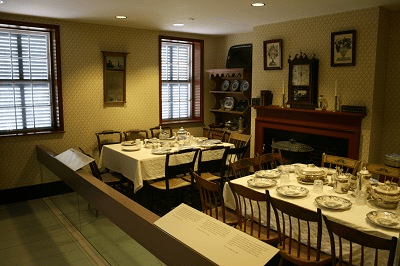
The park does a good job of showing the good, the bad, and the ugly of being a mill girl. If you take a tour of the Boott Cotton Factory, you’ll get to hear the ear-splitting sounds of the machinery in use, and exhibits explain the dangerous work and low pay that were hallmarks of workers’ lives well into the twentieth century. A visit to the boarding house museum shows how the mill girls lived, sleeping dormitory style and sharing meals. There were opportunities for socializing and studying during their extremely limited free time.
Not surprisingly, women workers were paid significantly less than men, and that, combined with the dangerous and exhausting working conditions and long hours, led to labor organization. The first two strikes or “turn-outs” occurred in 1834, when wages were cut, and in 1836, when rent on company housing was raised. The first one failed, but the second one had wider support and succeeded in keeping the rents stable.
In 1845, the first women’s union, the Lowell Female Labor Reform Association, was formed. They petitioned the Massachusetts General Court to reduce their workday from 12-14 hours to 10, persisting for almost ten years, until 1853, when the Lowell corporations agreed to an 11-hour day.
In a pattern that we still see today, employers’ response to organizing for better pay and hours was to find more desperate groups of workers who were willing to agree to the schedule and compensation the owners wanted. Irish women fleeing the potato famine and French-Canadians seeking a better life during an economic depression made up much of the labor pool in the late nineteenth century, while Eastern and Southern European immigrants became the predominant workers in the early 20th century.
Labor was cheaper still in the southern states, and many mills started moving there. New technologies, a failure to modernize, and the Great Depression closed many of the rest of the mills before World War II. The last of them shut down in the 1950’s.
Lowell was a run-down mill town by the 1960’s, when it was chosen to participate in the Model Cities Program created by Lyndon Johnson as part of his Great Society. When the Department of the Interior announced it would be creating 14 new National Parks near urban areas, city officials in Lowell hoped to be chosen. Lowell native Paul Tsongas was elected to Congress in 1974 and was instrumental in the creation of the Lowell National Historic Park in 1978.
The park and the University of Massachusetts at Lowell have made Lowell into a vibrant city with lots of public history, arts festivals, and restaurants with cuisines from around the world. Compare this to neighboring Lawrence, where urban renewal took the form of razing historic buildings, replacing them with shopping plazas and parking garages, and bisecting the city with the construction of Interstate 495.
The National Parks Service has been severely cut in the last year or two, thanks to DOGE and the Trump administration. I tend to think of the big, famous parks like Yellowstone and Yosemite being hurt by that, but it’s important to remember the impact this has on public history as well, with 64 National Historic Parks and 85 National Historic Sites across the U.S. that are supported by the NPS. Not only is history being preserved by these parks, but they can make a big difference to the life of a city, as Lowell shows us.
Books to read
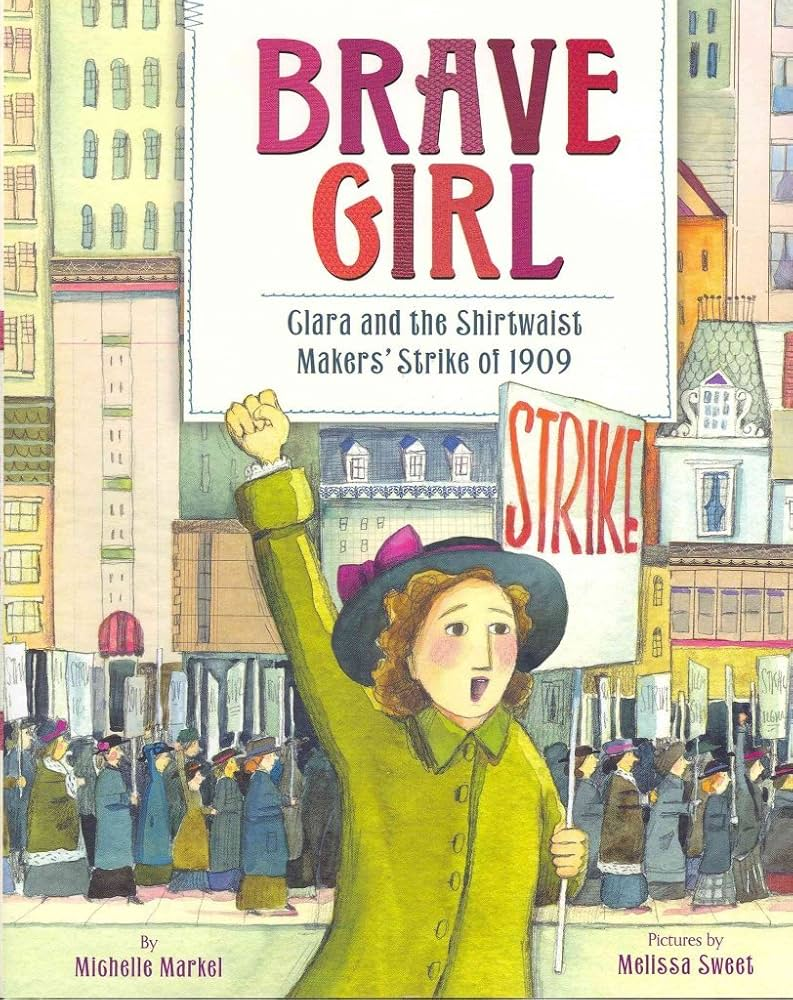
Brave Girl: Clara and the Shirtwaist Makers’ Strike of 1909 by Michelle Markel, illustrated by Melissa Sweet (Balzer + Bray, 2013, 32 pages, grades 1-4). The story of Clara Lemlich, a Ukranian immigrant, who worked in a New York City garment factory, and at the age of 23 led the largest walkout of U.S. women workers, leading to improved conditions for all workers.
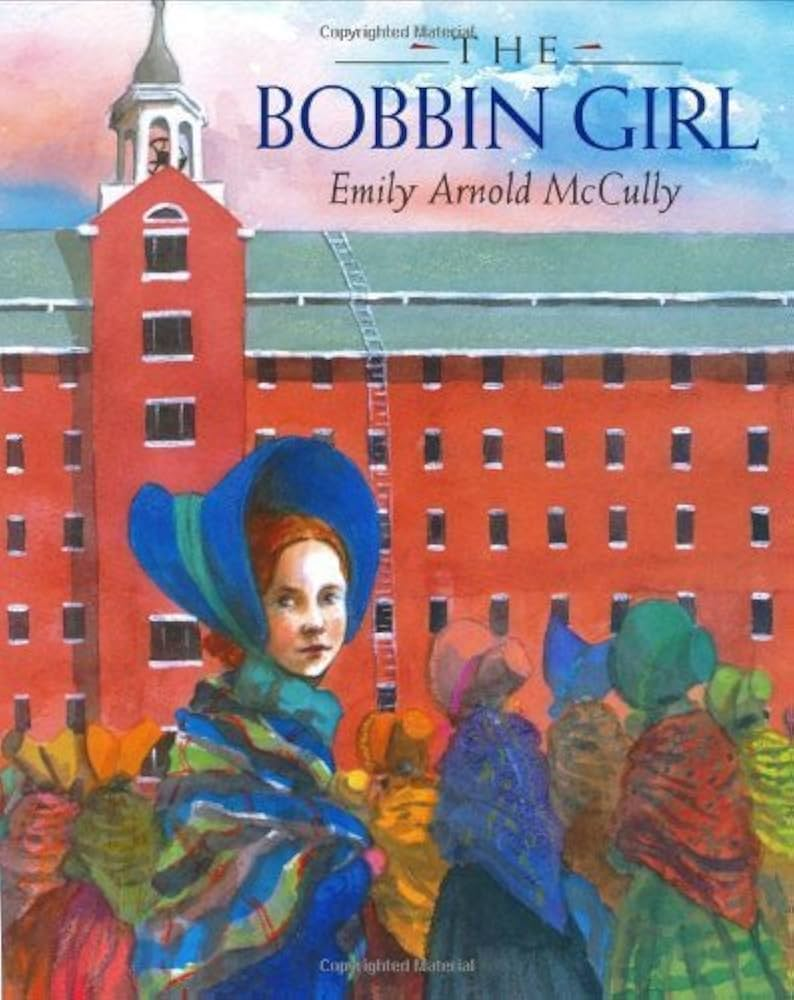
The Bobbin Girl by Emily Arnold McCully (Dial Books for Young Readers, 1996, 36 pages, grades 3-5). 10-year-old Rebecca works as a bobbin girl at the Lowell Mills and gets involved in a “turnout” as the other young women try to get higher wages. (out of print)
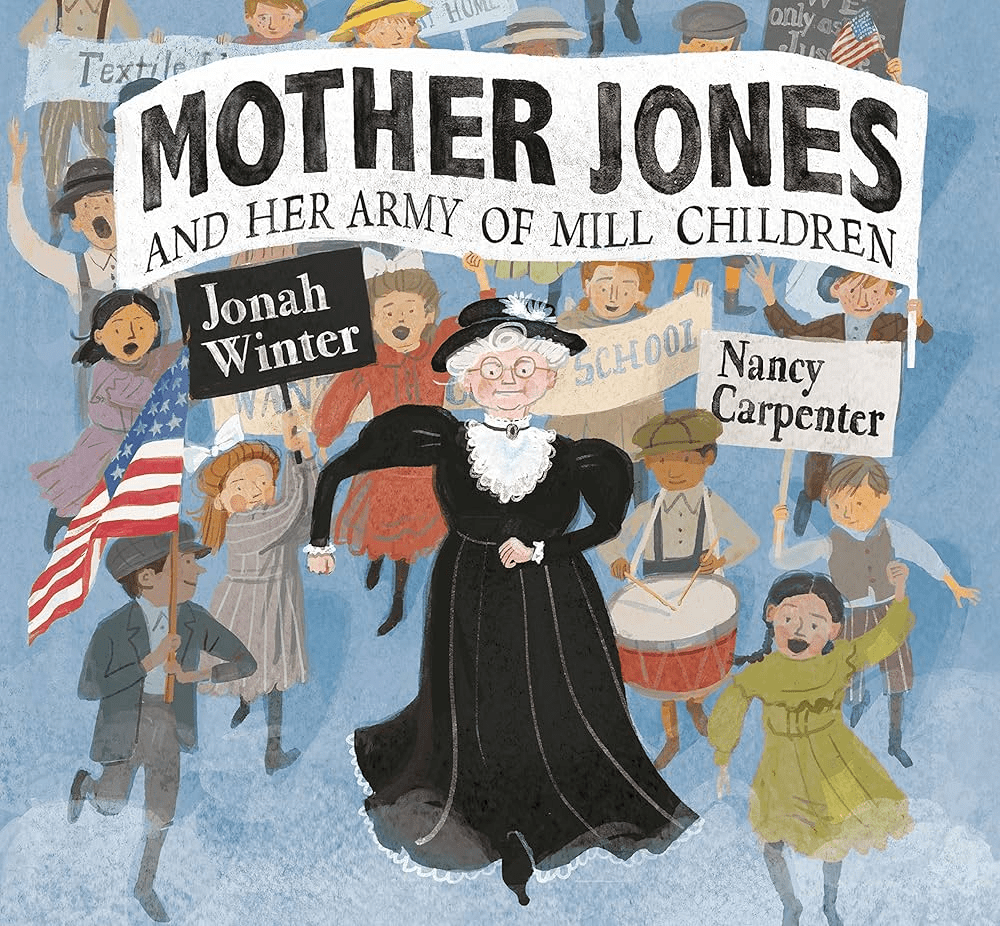
Mother Jones and Her Army of Mill Children by Jonah Winter, illustrated by Nancy Carpenter (Anne Schwartz Books, 2020, 40 pages, grades 2-5). Mother Jones tells the story of her 1903 Children’s Crusade, in which she marched with 100 children from Philadelphia to New York City to protest working conditions for young people.
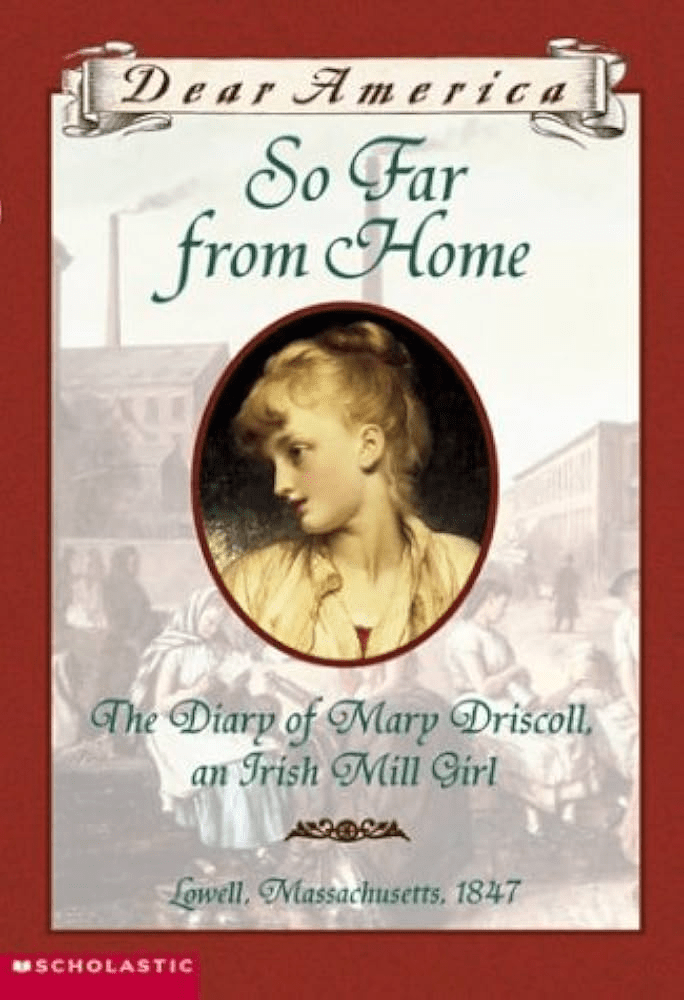
So Far From Home: The Diary of Mary Driscoll, an Irish Mill Girl, Lowell, Massachusetts, 1847 by Barry Denenberg (Scholastic, 1997, 176 pages, grades 4-7). Part of the Dear America diary series, this one features Mary Driscoll, who immigrates from Ireland to Lowell during the potato famine. It didn’t get great reviews and is currently out of print, but it gives a very realistic (i.e., not particularly hopeful) portrayal of the mill girl experience.
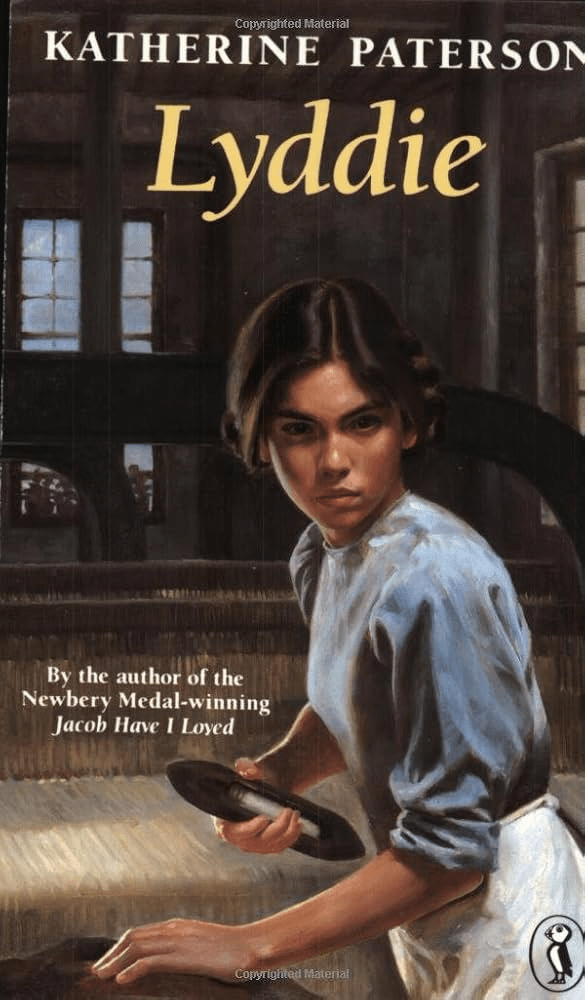
Lyddie by Katherine Paterson (Dutton, 1991, 182 pages, grades 4-8). The story of Lyddie Worthen, a 13-year-old girl from Vermont who comes to Lowell in 1843 to work in the mills and help pay off her family’s debts. She experiences the exhaustion and dangers of the factories, but ultimately is able to pursue an education for herself.
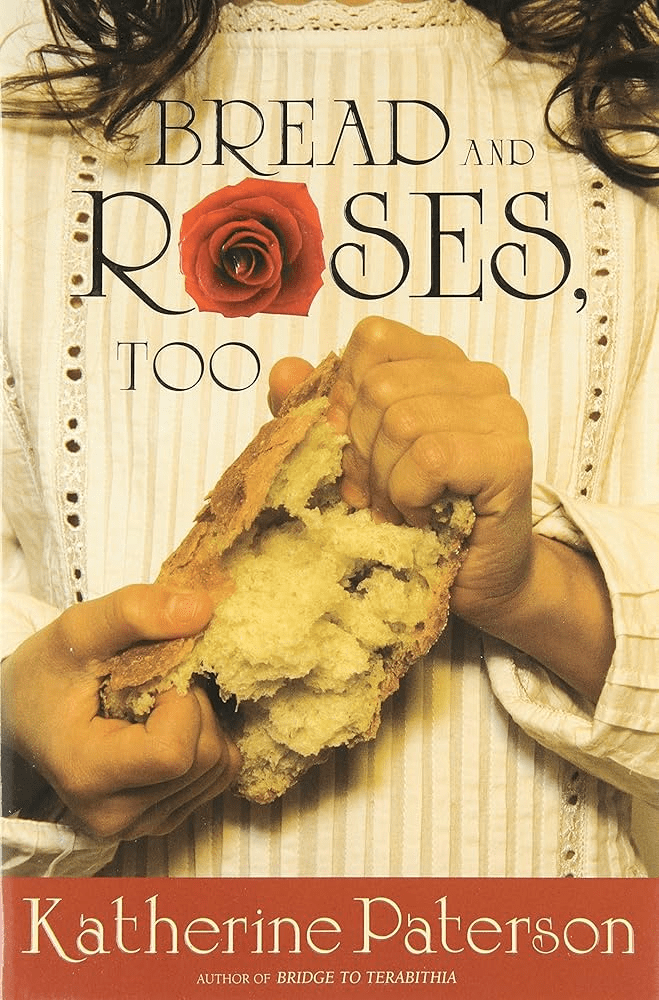
Bread and Roses Too by Katherine Paterson (Clarion Books, 275 pages, grades 4-8). Sixty years after Lyddie’s story, two other children journey from Massachusetts to Vermont to escape the dangers of the potentially violent 1912 Bread and Roses Strike in Lawrence. Rosa’s mother and older sister are involved in the strike, and they send Rosa on a train to Vermont, where she meets orphan Jake, a child factory worker escaping from his abusive father.


