Having now lived through both the Bicentennial and Semiquincentennial (had to look this up; it doesn’t roll off the tongue quite like Bicentennial), I’ve found myself reflecting on the American Revolution and what I was taught about it and the Founding Fathers in school. That, the explorers, and the colonial period were pretty much the core of my elementary social studies education, and there wasn’t a lot added in middle school.
When I look back on what I learned, it seems like a collection of people (mostly men) and dramatic events like the Boston Massacre, the Boston Tea Party, and Lexington and Concord. The Patriots were good, the British and Loyalists were bad, and in the end the scrappy underdogs triumphed and created a democracy.
Half a century later, I’ve been digging a little deeper. The era of the American Revolution has never seemed particularly interesting to me, but it occurred to me that maybe it’s because of how I learned about it. I haven’t watched Ken Burns’s documentary, but I’ve heard that he made it in the hopes of uniting the country. This seems ironic to me, since it’s about a conflict that was hugely divisive, when 40-45% of the population sympathized with the Patriots, 10-20% considered themselves Loyalists, and the rest were undecided.
So let’s take a look at two perhaps lesser-known men of the Revolution. You may know both of them by a single sentence or a single word…but therein lies the danger, because of course there is more to each of them than that descriptor. As with so much in history, when you scratch the surface, you realize that any person or event is complex and has multiple things that are true at the same time–and that often contradict each other.
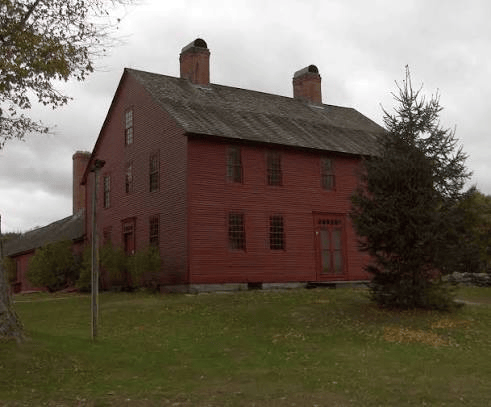
You probably know Nathan Hale for his final words, “I only regret that I have but one life to lose for my country.” He’s the official state hero of the state of Connecticut, having been executed on September 22, 1776, after the British caught him spying. I visited the Nathan Hale Homestead in Coventry, Connecticut, and even the tour guide there admitted that he didn’t have a great record as a spy.
Hale was a member of the newly created Knowlton’s Rangers, the first American intelligence-gathering organization. Just turned 21, Hale was the sole volunteer to answer George Washington’s call for a spy to travel to Manhattan to try to find out where and when the British were planning to invade. He disguised himself as a Dutch school master looking to find work.
Immediately upon landing in New York, Hale was spotted by Robert Rogers, a notorious double agent who had fought in the French and Indian War and was known to side with both the Americans and the British. At the moment, he was working for the British, and he recognized Hale as a spy right away. Engaging Hale in conversation at a tavern, Rogers posed as an American spy and got Nathan to admit that he was one as well. The game was up, and Nathan Hale was arrested and executed.
Did he really utter that famous line before being hanged? Historians have debated that for all these years, and we will never know, but that and the fact that he was young, handsome, and courageously volunteered for a mission that no one else was willing to take on has made him a war hero, even though he didn’t get a chance to do much for the cause.
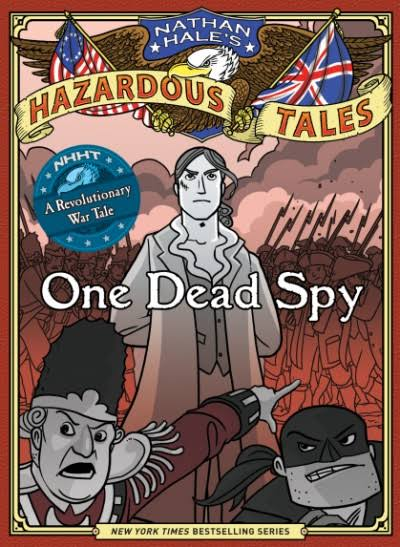
If you like touring historic homes from this era, the Hale Homestead is a fun one to tour, but you won’t learn much about Nathan’s war experiences. For that, I recommend One Dead Spy, the original book in the Nathan Hale’s Hazardous Tales graphic history series by a different, more contemporary Nathan Hale. Each story is told by Nathan Hale to his executioners as he tries to distract them from their task. Another good one about the American Revolution is Lafayette!, which tells the story of the young French Marquis de Lafayette.
And now for spy number two. Before this summer, my knowledge of Benedict Arnold began and ended with the Brady Bunch, season 4 episode 12, when Peter endures the humiliation of playing Benedict Arnold in the class play. There’s also an episode called “My Sister, Benedict Arnold,” where Greg thinks Marcia has betrayed him. Clearly, the name Benedict Arnold has become shorthand for a traitor. But is there more to the story?
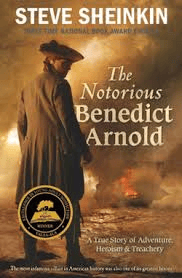
To answer that question, I recommend reading Steve Sheinkin’s excellent YA nonfiction book The Notorious Benedict Arnold: A True Story of Adventure, Heroism and Treachery. Notice how “treachery” is the third and final word in that subtitle. Before switching sides, Arnold was a bold and successful general for the Continental Army, one of two leaders at the Battle of Saratoga in 1777 which ended with the first-ever surrender of a British field army and convinced the French to join the American side.
Arnold was severely injured in that battle, leaving his left leg significantly shorter than his right, a painful disability that hindered him for the rest of his life. He appears to have had a short temper and a thin skin and often felt he was passed over for promotions and suffered other slights, whether real or imagined. He lost a good deal of money at various points during the Revolution, and all of these factors led to him feeling disillusioned about the cause.
In 1779, Arnold married 18-year-old Peggy Shippen, the daughter of Loyalists in Philadelphia, and that association seems to have been the final factor in his betrayal. The next year, as commander at West Point, his treason was discovered by Washington. His fate was not like Nathan Hale’s, however. Benedict Arnold became a general in the British army and lived on for many years after the war in Britain and Canada.
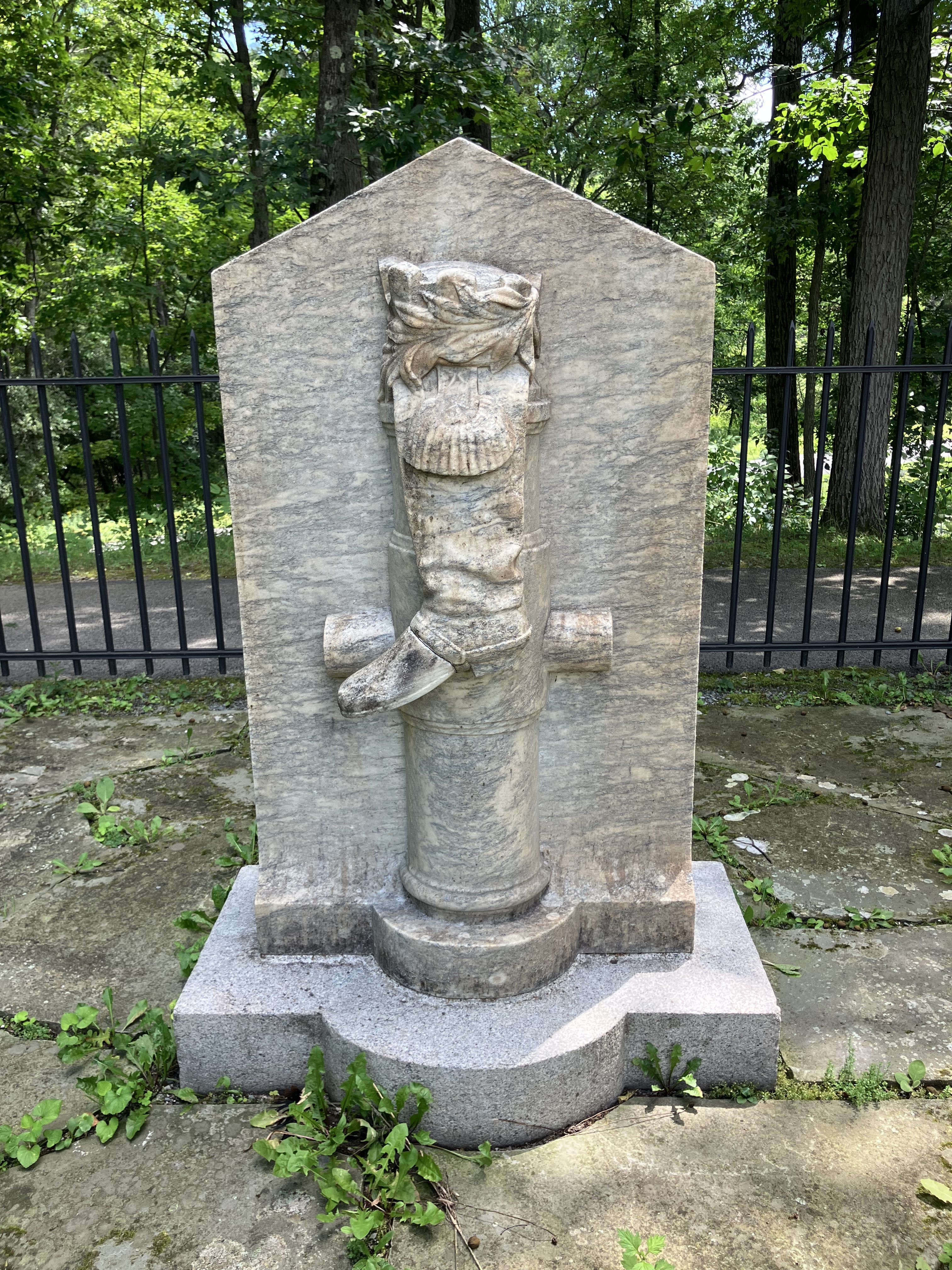
Arnold has become the American Revolutionary equivalent of Lord Voldemort, he who shall not be named. Probably the most famous memorial to him is the Boot Monument at Saratoga National Historic Park, which carries the inscription, “In memory of the most brilliant soldier of the Continental army, who was desperately wounded on this spot, winning for his countrymen the decisive battle of the American Revolution, and for himself the rank of Major General.” A plaque at the United States Military Academy at West Point simply says “Major General, born 1740” amongst other plaques commemorating American Revolution generals.
I visited Saratoga to learn more about Arnold and to see the boot, but I really only succeeded in the latter mission. The video at the visitors’ center mentions him a few times, including his courageous conduct in the battle, but ends with a brief comment about his injury, not elaborating on what it cost him for the rest of his life. Reading Sheinkin’s book helped me to better understand why Arnold switched sides in the American Revolution, and I believe that process may have begun at this battle. It would have been interesting to dig into that more at the park, either in the video or the exhibits.
So there you have it: a courageous man who made a mistake on his first spy mission, was executed, and lives on as a hero, and another courageous man who helped turned the tide of the entire Revolution and is remembered only as a traitor. To quote the Bicentennial Moments of my childhood, “and that’s the way it was.” Or wasn’t. Learning more about the reality, instead of the mythology, of both Hale and Arnold definitely made them both more sympathetic and relatable to me than what I saw in my history books.

 The Resistance Files